

Quick Summary
Diwali is the perfect time to dress up and embrace traditional fashion. From sarees and lehengas to a stylish Diwali kurta, there are plenty of festive options for the whole family.
Men can choose a sophisticated chikankari kurta, while women can explore sarees, lehengas, anarkalis, and kurta sets. Children can opt for comfortable traditional outfits that let them enjoy the celebrations.
Kashmiri Sons offers traditional and contemporary festive styles for different family members. From family pujas to Diwali parties, the right colours, fabrics, and accessories can help create a stylish and coordinated festive look.
What You’ll Learn in This Blog:
- Diwali outfit ideas for men, women, and kids
- Traditional outfit ideas for different Diwali celebrations
- How to style festive traditional clothing
- Saree, lehenga, anarkali, and kurta styling ideas
- Comfortable Diwali outfit ideas for children
- Matching and coordinated family outfit ideas
- Festive colours and fabrics to consider
- Jewellery, footwear, and accessory suggestions
- How to choose outfits according to the occasion
- Practical tips for creating a versatile festive wardrobe
Introduction
Diwali is one of the most celebrated festivals in India, and getting dressed up is a big part of the excitement. Homes are decorated with diyas and lights, families come together, sweets are exchanged, and festive gatherings fill the calendar.
For many families, Diwali is also the perfect opportunity to wear traditional clothing that may not come out of the wardrobe very often. A beautiful saree, an embroidered kurta, an elegant lehenga, or a traditional outfit for children can instantly create the feeling of celebration.
But festive fashion has changed over the years. Families are no longer choosing outfits simply because they look elaborate. Comfort, versatility, personal style, and modern detailing have become equally important.
The 2026 festive season is all about combining traditional charm with modern comfort. Classic Indian silhouettes continue to remain popular, but they are being styled in fresher and more relaxed ways.
Lighter fabrics, contemporary colour combinations, subtle embroidery, comfortable silhouettes, and thoughtful accessories can make festive dressing easier for the whole family.
The best part is that every family member does not need to wear exactly the same outfit. Complementary colours and similar details can create a coordinated appearance while allowing everyone to express their own personality.
The goal is to choose outfits that feel festive while still feeling comfortable enough to enjoy the celebration.
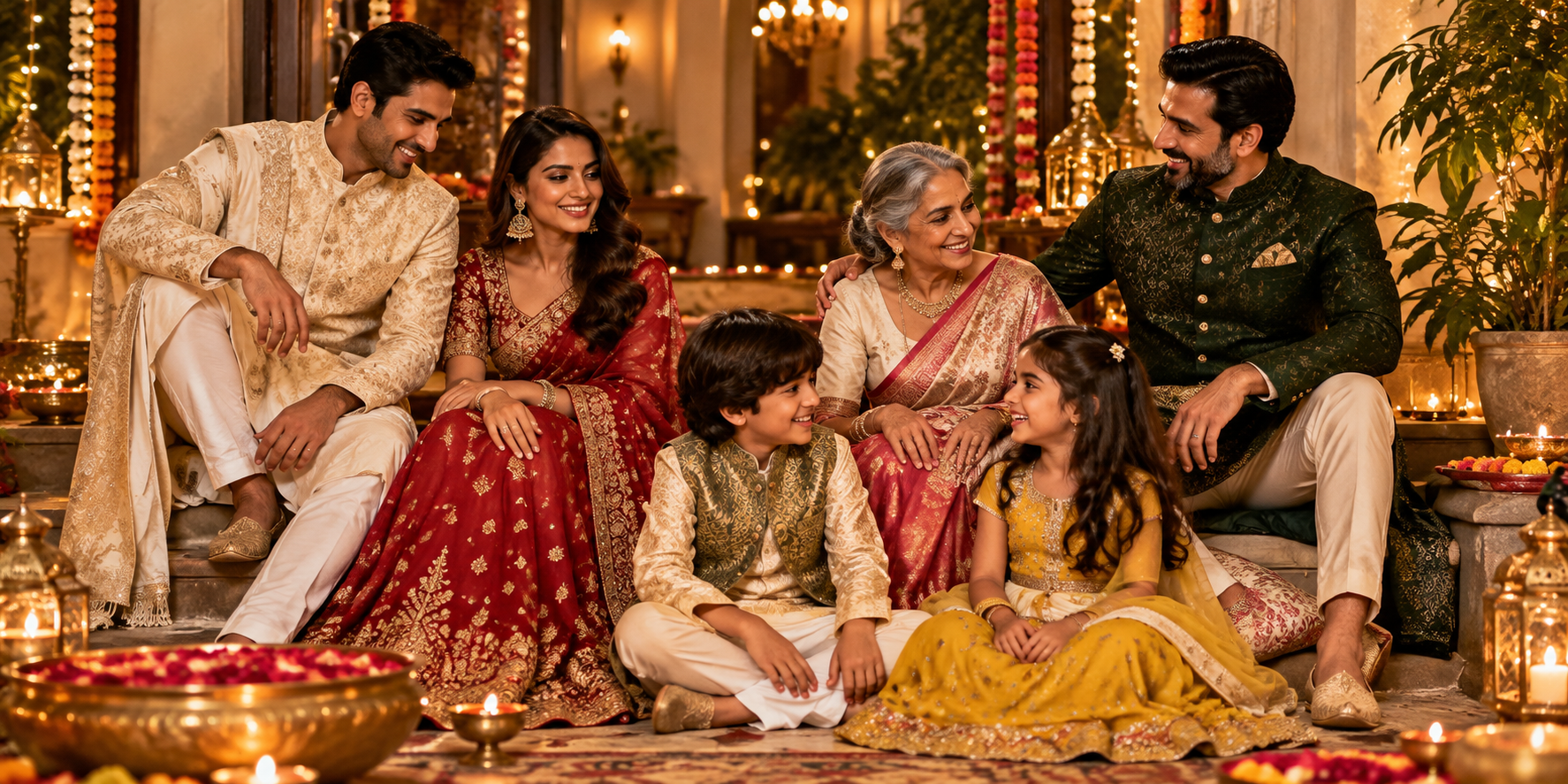
Diwali Dress Ideas for Men: Traditional Styles with a Modern Touch
Men have plenty of choices when it comes to festive dressing. While the classic kurta-pyjama remains a popular option, modern festive fashion offers many ways to make traditional clothing look fresh.
The right outfit depends on the type of celebration, personal style, and how formal you want the appearance to be.
Classic Traditional Looks for Men
A well-fitted traditional kurta can be one of the easiest choices for men who want a festive appearance without making the outfit overly complicated.
For a simple celebration, choose a clean and minimal design. For an evening event, you can select a kurta with embroidery, textured fabric, subtle zari, or other festive detailing.
Colours such as ivory, beige, mustard, maroon, bottle green, navy, and deep blue can create a sophisticated festive appearance.
Pair the kurta with traditional trousers, churidar, or a well-fitted pyjama for a balanced look.
Elegant Embroidered Kurtas
Men who prefer delicate detailing can choose embroidered kurtas with subtle threadwork or traditional patterns.
These styles can create a refined appearance without making the outfit feel too heavy.
For daytime celebrations, lighter colours can work beautifully, while deeper shades can create a richer evening appearance.
Nehru Jackets and Ethnic Layers
A Nehru jacket can instantly make a simple kurta look more polished.
Instead of choosing an identical colour, try pairing contrasting or complementary shades.
An ivory kurta can work with a deep green jacket, while a navy kurta can be paired with beige, gold, or another muted shade.
This simple addition can make the outfit suitable for larger family gatherings or evening celebrations.
Bandhgalas and Indo-Western Outfits
For formal Diwali events, men can experiment with bandhgalas or Indo-Western combinations.
These outfits offer a structured appearance while retaining traditional elements.
They can be particularly suitable for formal dinners, larger parties, and celebrations where you want a more sophisticated look.
Choosing Colours for Men’s Diwali Outfits
Traditional festive shades such as maroon, mustard, green, red, navy, and royal blue can create a rich appearance.
For a softer look, men can choose ivory, cream, beige, pastel blue, or muted green.
The important thing is to choose a colour that complements your overall appearance and suits the occasion.
Elegant Diwali Outfits for Women: Sarees, Lehengas & More
Women have countless options for festive dressing. Sarees, lehengas, anarkalis, shararas, ghararas, kurta sets, and Indo-Western outfits can all work beautifully for different Diwali celebrations.
The right choice ultimately depends on your personal style, comfort, and the type of event.
Sarees for Timeless Diwali Style
The saree remains one of the most versatile choices for festive dressing.
Lightweight silk, organza, georgette, chiffon, tissue, and similar fabrics can offer traditional elegance without making the outfit feel excessively heavy.
You can keep the saree simple and allow the blouse to become the main feature.
Contemporary necklines, embroidered backs, statement sleeves, contrasting colours, and subtle embellishments can give a traditional saree a modern appearance.
Elegant Lehengas
Lehengas are a natural choice when you want a more glamorous festive appearance.
You do not necessarily need a heavily embroidered design. Lightweight lehengas with floral patterns, delicate embroidery, mirror work, sequins, or subtle detailing can look equally festive.
Pastel shades can work well for daytime celebrations, while deeper colours can create a richer evening appearance.
Anarkali Suits
Anarkalis offer a graceful silhouette while being relatively easy to manage.
Long anarkalis with delicate embroidery can work beautifully for evening celebrations. Lighter printed or minimally embellished versions can be suitable for family gatherings and daytime festivities.
Complete the look with juttis, simple jewellery, and a small clutch.
Sharara and Gharara Sets
Sharara and gharara sets combine traditional styling with a comfortable silhouette.
They are particularly suitable for family gatherings, festive lunches, smaller celebrations, and Diwali parties.
Floral prints, mirror work, colourful embroidery, and embellished dupattas can instantly make the outfit feel more festive.
Kurta Sets for Women
A kurta set can be one of the most versatile pieces in a festive wardrobe.
Straight-cut kurtas can be paired with palazzos, cigarette pants, skirts, or traditional bottoms.
Changing the dupatta can also completely transform the appearance.
A simple kurta with a plain dupatta can look understated, while an embroidered or organza dupatta can create a more festive appearance.
Festive Diwali Outfits for Kids: Cute and Traditional Looks
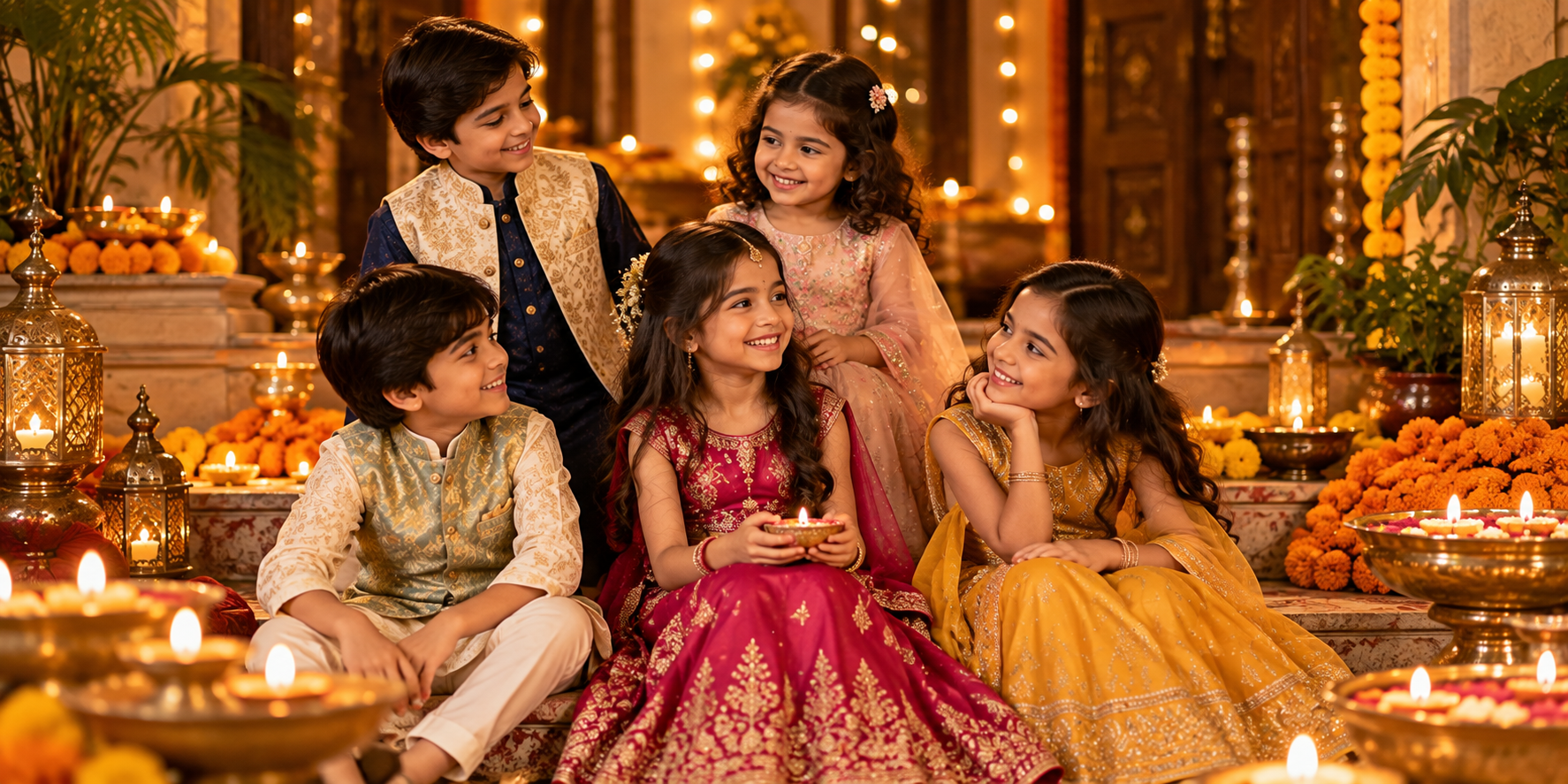
Children’s Diwali outfits should look festive while allowing them to remain comfortable throughout the celebration.
Kids may spend the evening playing with cousins, sitting during puja, eating dinner, taking photographs, and moving around with family.
For this reason, comfort should be considered alongside appearance.
Traditional Outfits for Boys
Boys can wear kurtas with pyjamas, churidars, or comfortable traditional trousers.
A small Nehru jacket or waistcoat can make the outfit look more festive.
Ivory, cream, beige, pastel green, and light blue can create a charming daytime appearance, while deeper colours can work well for evening celebrations.
Festive Outfits for Girls
Girls can choose from lehengas, anarkalis, sharara sets, traditional dresses, or comfortable kurta sets.
Light embroidery, mirror work, colourful borders, or a pretty dupatta can add festive character without making the outfit excessively heavy.
For younger children, simple designs and lightweight fabrics can be easier to manage.
Keep Children’s Comfort in Mind
Children may not want to sit still throughout the celebration, so their clothing should allow easy movement.
Avoid outfits that are excessively tight, heavy, itchy, or difficult to manage.
Breathable fabrics and comfortable footwear can help children enjoy the celebration without constantly adjusting their clothes.
Matching Family Outfits for a Picture-Perfect Diwali
Family members do not need to wear identical outfits to look coordinated.
Instead, choose complementary colours, similar textures, or a shared colour palette.
For example, one person could wear emerald green, another could choose a softer shade of green, while another family member could add gold or beige.
This creates visual harmony while allowing everyone to maintain their own personal style.
Coordinating Colours
Colour coordination is one of the easiest ways to create a family look.
Choose one main colour and use different shades across the family.
Parents can wear deeper tones while children wear lighter versions of the same colour.
This approach can look especially beautiful in family photographs.
Coordinating Through Fabrics and Details
You can also create coordination through similar textures or traditional details.
Embroidery, zari, silk, mirror work, or similar festive elements can connect different outfits without making them look identical.
Couple Styling
Couples can coordinate their Diwali looks through complementary colours rather than wearing exactly matching outfits.
Deep green can work beautifully with gold, beige, ivory, or a lighter green.
Similarly, navy can be paired with wine, ivory, silver, or soft pink.
The goal is to create harmony rather than duplication.
How to Choose the Right Colours and Accessories for Diwali
Colour is one of the easiest ways to make an outfit feel festive.
Diwali gives you the perfect opportunity to move away from everyday neutrals and experiment with richer and more celebratory shades.
Jewel Tones
Emerald green, royal blue, burgundy, wine, plum, deep purple, and navy can create an elegant evening appearance.
These shades pair particularly well with gold or silver detailing.
If your outfit already has a rich colour, keep the accessories relatively simple.
Traditional Festive Shades
Red, maroon, mustard, orange, pink, green, yellow, and gold remain timeless choices.
These colours naturally feel festive and can work across different traditional silhouettes.
You do not necessarily have to wear a bright colour from head to toe.
A mustard outfit with neutral trousers, a maroon saree with a contrasting blouse, or a green lehenga with subtle gold detailing can create a more balanced appearance.
Pastel Colours
Pastels are ideal for anyone who prefers softer and more contemporary fashion.
Blush pink, peach, lavender, mint green, powder blue, ivory, and sage green can create a fresh appearance.
They work particularly well for daytime celebrations, although they can also be styled for evening events with metallic jewellery and richer accessories.
Jewellery and Accessories
Accessories can completely change the final appearance of a festive outfit.
Women can consider statement earrings, bangles, necklaces, rings, clutches, or embellished footwear.
Men can add a watch, stole, pocket square, traditional footwear, or an ethnic jacket.
The important thing is balance. If the clothing already has heavy embroidery, simpler jewellery may create a more polished appearance.
Styling Tips to Make Your Family’s Festive Looks Stand Out
You don’t always need to purchase an entirely new outfit to create a fresh festive look.
A few thoughtful styling changes can make something already in your wardrobe feel completely different.
Experiment With Layering
A dupatta, embroidered jacket, cape, stole, or ethnic shrug can transform a traditional outfit.
Men can add a Nehru jacket or stole to a simple kurta, while women can layer embroidered jackets over kurtas, skirts, or traditional sets.
Choose One Statement Element
Try not to make every part of the outfit equally dramatic.
Choose one feature that becomes the highlight.
It could be statement earrings, an embroidered dupatta, an embellished blouse, an embroidered jacket, or distinctive footwear.
Keeping the remaining elements relatively simple creates a more balanced appearance.
Pay Attention to Footwear
Festive footwear should look stylish but also be comfortable.
Women can consider juttis, embellished sandals, block heels, or traditional footwear.
Men can choose juttis, mojaris, loafers, or formal shoes depending on their outfit.
Children should have comfortable footwear that allows them to move easily.
Style Your Dupatta Differently
A different dupatta can completely change an outfit.
Try an organza dupatta with a simple kurta set, a printed dupatta with a solid outfit, or an embroidered piece for a more festive appearance.
Changing the draping style can also give an existing outfit a fresh look.
Balance Jewellery With the Outfit
Jewellery should complement your outfit rather than compete with it.
If the clothing already has heavy embroidery, simpler jewellery may create a more balanced appearance.
With a relatively simple outfit, statement earrings, bangles, necklaces, or rings can become the main feature.
Quick Tips for Building a Versatile Family Festive Wardrobe
You don’t need a huge wardrobe to dress well throughout the festive season.
A few versatile pieces can be styled differently for several occasions.
Keep a Classic Festive Kurta
A traditional kurta can work for family pujas, festive lunches, dinners, and larger celebrations.
Changing the jacket, footwear, stole, or accessories can give the same outfit a completely different appearance.
Add a Chikankari Kurta
A delicate embroidered kurta can be a versatile addition to a traditional wardrobe.
Its subtle detailing makes it suitable for daytime celebrations, family gatherings, festive lunches, and occasions where you want an elegant but understated appearance.
Keep an Ethnic Jacket
An ethnic jacket is one of the most useful layering pieces in a festive wardrobe.
Men can pair a neutral jacket with different kurtas, while women can layer embroidered jackets over traditional sets, skirts, or dresses.
Build a Small Jewellery and Accessories Collection
You don’t need dozens of accessories.
A few versatile earrings, bangles, necklaces, rings, watches, clutches, stoles, and traditional footwear can be mixed and matched with different outfits.
Choose Comfortable Footwear
Good footwear can make a major difference to your festive experience.
Choose something that complements your outfit but still allows you to walk, stand, and move comfortably.
Conclusion
Diwali fashion in 2026 is all about finding the right balance between traditional charm, personal style, family coordination, and comfort.
From an elegant Diwali kurta and a delicate chikankari kurta to sarees, lehengas, anarkalis, sharara sets, Nehru jackets, and traditional outfits for children, there are countless ways for every member of the family to dress for the festive season.
Instead of making everyone wear identical outfits, think about complementary colours, similar textures, and coordinated details.
A Diwali kurta can create a classic festive look for men, while a chikankari kurta offers a more subtle and sophisticated option for family gatherings and daytime celebrations.
Before choosing your outfits, consider the occasion, weather, venue, fabric, colours, and amount of movement you’ll need throughout the celebration.
A beautiful outfit should make you feel confident and comfortable enough to enjoy the people and moments around you.
After all, Diwali is not just about looking good in photographs. It is about spending time with family, meeting friends, enjoying good food, celebrating traditions, and creating memories together.
If you’re looking for traditional and contemporary festive clothing, Kashmiri Sons offers styles that can work for different occasions and members of the family.
Ultimately, the right Diwali kurta or chikankari kurta is one that makes you feel confident, comfortable, and ready to enjoy every part of the celebration.
People Also Ask
What should men wear for Diwali?
Men can choose a traditional kurta, kurta-pyjama, Nehru jacket, bandhgala, embroidered jacket, or Indo-Western outfit depending on the occasion and personal style.
Which kurta is best for Diwali?
A well-fitted kurta in a festive shade such as ivory, maroon, green, mustard, navy, or beige can work beautifully. Delicate embroidery can also add a sophisticated festive touch.
Is a chikankari kurta suitable for Diwali?
Yes, a chikankari kurta can be a sophisticated choice for Diwali. Its delicate detailing creates a traditional appearance without making the outfit feel excessively heavy.
What should women wear for Diwali?
Women can choose sarees, lehengas, anarkalis, shararas, ghararas, kurta sets, or Indo-Western outfits according to the celebration and their personal style.
What should kids wear for Diwali?
Kids can wear comfortable traditional outfits such as kurtas, kurta-pyjamas, lehengas, anarkalis, sharara sets, or festive dresses.
How can families coordinate their Diwali outfits?
Families can coordinate through complementary colours, similar fabrics, shared patterns, or coordinated accessories without wearing exactly identical outfits.
Which colours are suitable for Diwali outfits?
Red, maroon, mustard, orange, pink, green, yellow, emerald, royal blue, wine, and other rich festive shades can work beautifully. Pastels can also create a softer contemporary appearance.
What should I wear to a Diwali party?
A statement saree, embellished lehenga, anarkali, sharara set, traditional kurta, Nehru jacket, bandhgala, or Indo-Western outfit can work well depending on the formality of the event.
How can I make a simple festive outfit look stylish?
Add one statement element such as jewellery, an embroidered dupatta, an ethnic jacket, a statement blouse, a stole, or festive footwear.
Frequently Asked Questions
1. What are the best Diwali outfit ideas for families?
Families can combine traditional and contemporary outfits such as sarees, lehengas, kurtas, embroidered kurtas, anarkalis, shararas, and traditional children’s outfits. Coordinating colours can help create a unified family appearance.
2. What should men wear for Diwali?
Men can choose a traditional kurta with pyjamas, trousers, or a Nehru jacket. Bandhgalas and Indo-Western outfits can also work well for formal evening celebrations.
3. Is a chikankari kurta good for Diwali?
A chikankari kurta can be an elegant choice for Diwali, particularly for people who prefer delicate traditional detailing and a sophisticated appearance.
4. What should women wear for Diwali?
Women can choose sarees, lehengas, anarkalis, shararas, ghararas, kurta sets, or Indo-Western outfits according to the occasion and their personal style.
5. What should children wear for Diwali?
Children can wear comfortable kurtas, kurta-pyjamas, lehengas, anarkalis, sharara sets, or festive dresses. Lightweight fabrics can make the outfits easier to manage during long celebrations.
6. How can I coordinate family Diwali outfits?
Choose complementary colours, similar textures, or a common colour palette. Family members do not need to wear identical outfits to create a coordinated appearance.
7. Which colours are best for Diwali outfits?
Red, maroon, mustard, orange, pink, green, yellow, emerald, royal blue, wine, and gold can all work well. Pastel shades are also suitable for a softer modern appearance.
8. How can I make a Diwali kurta look more festive?
Add a Nehru jacket, traditional footwear, stole, watch, pocket square, or subtle accessories. Choosing a festive colour can also make a simple kurta look more appropriate for Diwali.
9. How can I make children’s Diwali outfits comfortable?
Choose breathable fabrics, comfortable footwear, lightweight layers, and silhouettes that allow children to move easily. Avoid outfits that are too tight, heavy, or difficult to manage.
10. How can I style traditional outfits with modern trends?
Try contemporary colour combinations, modern silhouettes, structured jackets, statement accessories, updated footwear, or a combination of traditional and contemporary pieces.