

Quick Summary
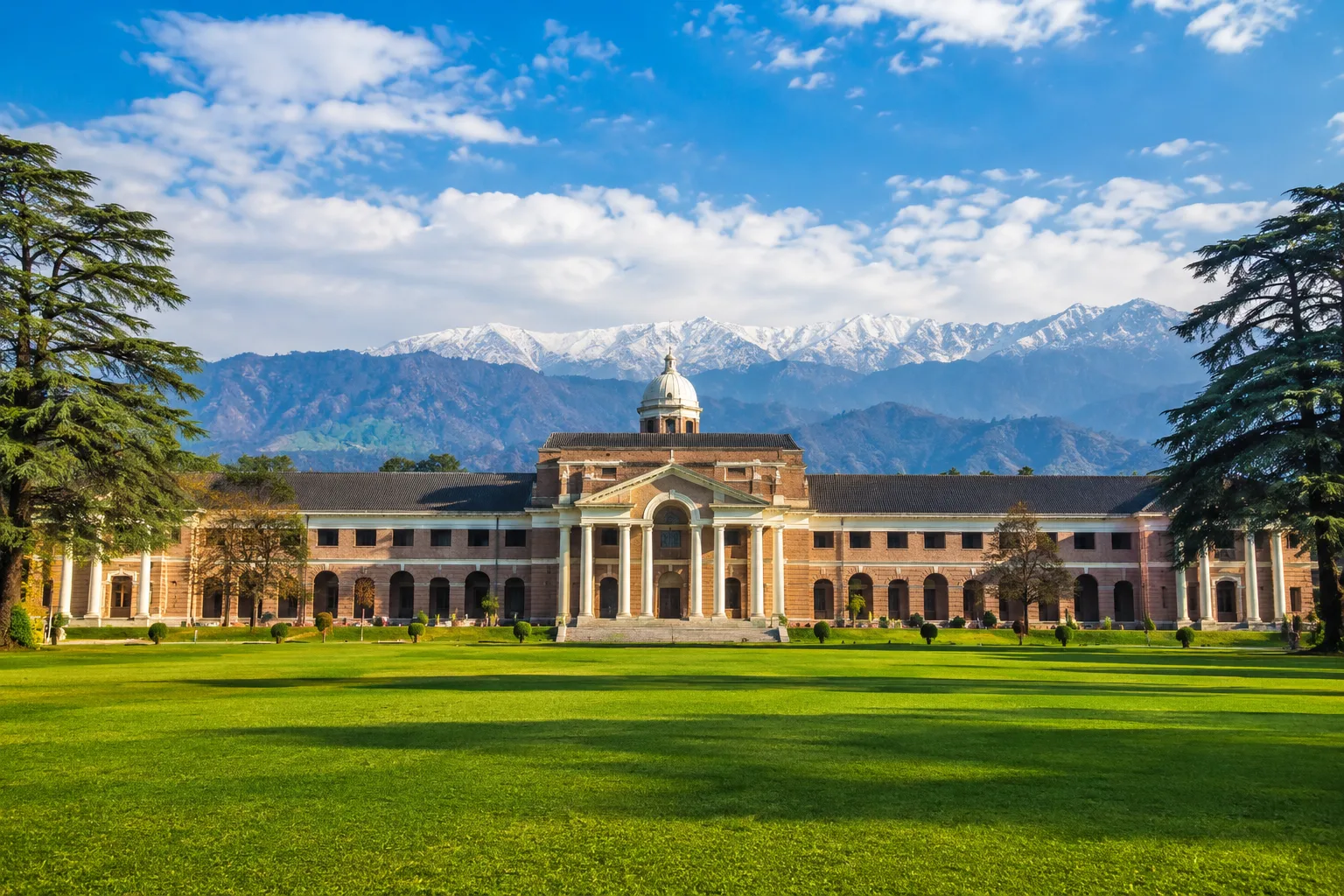
The Forest Research Institute Dehradun is a historic research institution known for its grand Greco-Roman and colonial-style architecture, huge green campus, forestry museums, botanical collections, and peaceful surroundings. It is a good place to visit if you enjoy architecture, photography, history, nature, or educational attractions.
What You’ll Learn in This Blog
- The history behind FRI and how it developed over the years
- Why the main building is so popular with visitors
- What you can expect inside the museums
- Some of the best spots for photography
- Important visitor information, including timings and current ticket details
- Places near FRI that you can include in your Dehradun itinerary
- Answers to common questions about visiting FRI
Introduction
When people think about places to visit in Dehradun, they often look for waterfalls, caves, temples, cafes, or viewpoints. But there is one place that feels a little different from the usual tourist attractions. The Forest Research Institute Dehradun is a mix of history, architecture, greenery, education, and forestry research, all in one large campus.
The first thing you notice is the impressive main building. Its wide lawns, long corridors, large columns, and grand structure make it look more like a historic European landmark than a research institute in the middle of Dehradun. Behind it, the Outer Himalayas add to the setting.
But there is much more to FRI than its famous building. The campus has museums, botanical collections, research facilities, an old and important herbarium, and large green spaces. The institute traces its roots to 1906, when the Imperial Forest Research Institute was established. Its present main building was completed in 1929.
Today, it is both a major forestry research institution and one of Dehradun’s best-known landmarks.
If you are planning a visit, this guide will help you understand what makes the place special, what you can see, where to take photographs, how the visitor system works, and which nearby attractions you can add to your trip.
History of FRI
The story of FRI goes back to 1906, when the Imperial Forest Research Institute was established to organize and lead forestry research in India. Over time, the institution became closely connected with the development of scientific forestry across India and the wider Indian subcontinent.
The institute was not created simply as a tourist landmark. Its main purpose was research, training, and the development of better knowledge and practices related to forests and forest resources.
After independence, the institution continued its forestry work under a new identity. In 1988, FRI and its research centres were brought under the Indian Council of Forestry Research and Education (ICFRE), which functions under the Ministry of Environment, Forest and Climate Change.
The present campus at New Forest is one of the most recognizable parts of the institute.
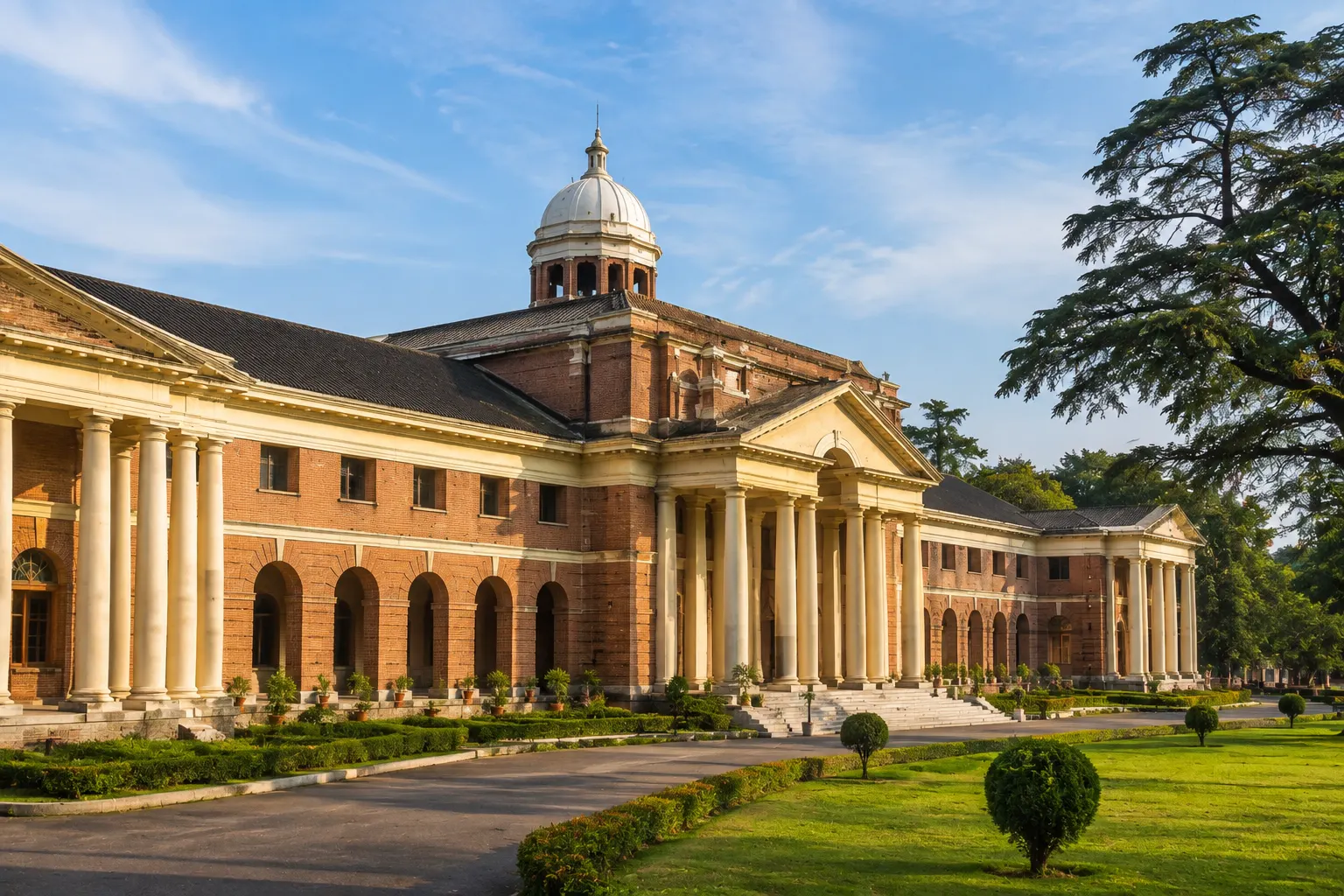
The main building was completed in 1929 and was designed in a grand architectural style that combines Greco-Roman influences with other colonial elements. The official institute information describes the campus as being set in the green surroundings of the Doon Valley, with the Outer Himalayas forming its backdrop.
The size of the estate is also impressive. Official FRI pages describe the campus as covering roughly 450 to 500 hectares, depending on the area being referenced.
This large green setting is one reason the institute feels different from a normal city attraction.
From forestry institute to city landmark
Over the years, the institute became more than an important centre for forestry research. Its architecture and green surroundings gradually made it one of the places visitors wanted to see while exploring Dehradun.
The main building is now one of the most photographed structures in the city.
At the same time, the campus continues to serve its original academic and research purpose. It has laboratories, a library, herbarium collections, research divisions, arboretum areas, and other facilities connected with forestry.
This combination is what makes a visit interesting. You are not just walking around an old building. You are visiting a place that is still connected with active research and education.
Why FRI matters to forestry
The work carried out here covers many areas, including forest ecology, climate change, forest products, forest protection, genetics and tree improvement, forest botany, silviculture, and forest management.
The institute also has a long history of preserving and studying plant collections.
For example, the Dehradun Herbarium has a very old history and contains a large collection of plant specimens. The official Forest Botany Division notes that the collection includes around 350,000 specimens, with some of the oldest material dating back to the early 19th century.
So, while tourists may visit for the building and photographs, there is a much deeper scientific story behind the campus.
Architecture & Museums
The architecture is probably the first thing that catches the attention of most visitors.
The main building has a huge central structure with long wings, tall columns, large windows, and an open approach that makes it look especially impressive when viewed from the front lawn.
The official institute describes the architecture as a combination of Greco-Roman and Oriental influences, while its history page also refers to Greco-Roman and colonial styles.
For visitors, the best part is that you can experience the architecture while also learning about forestry inside the museums.
The main building
The building is large enough that it can feel overwhelming when you first see it.
The open lawn in front gives you a good view of the entire structure. This is also one of the easiest places to understand why the institute has become such an important visual symbol of Dehradun.
The scale of the building works especially well in photographs. A wide-angle photograph from the central lawn can capture the symmetry of the structure, while closer shots can highlight the columns, windows, and architectural details.
Museums inside the campus
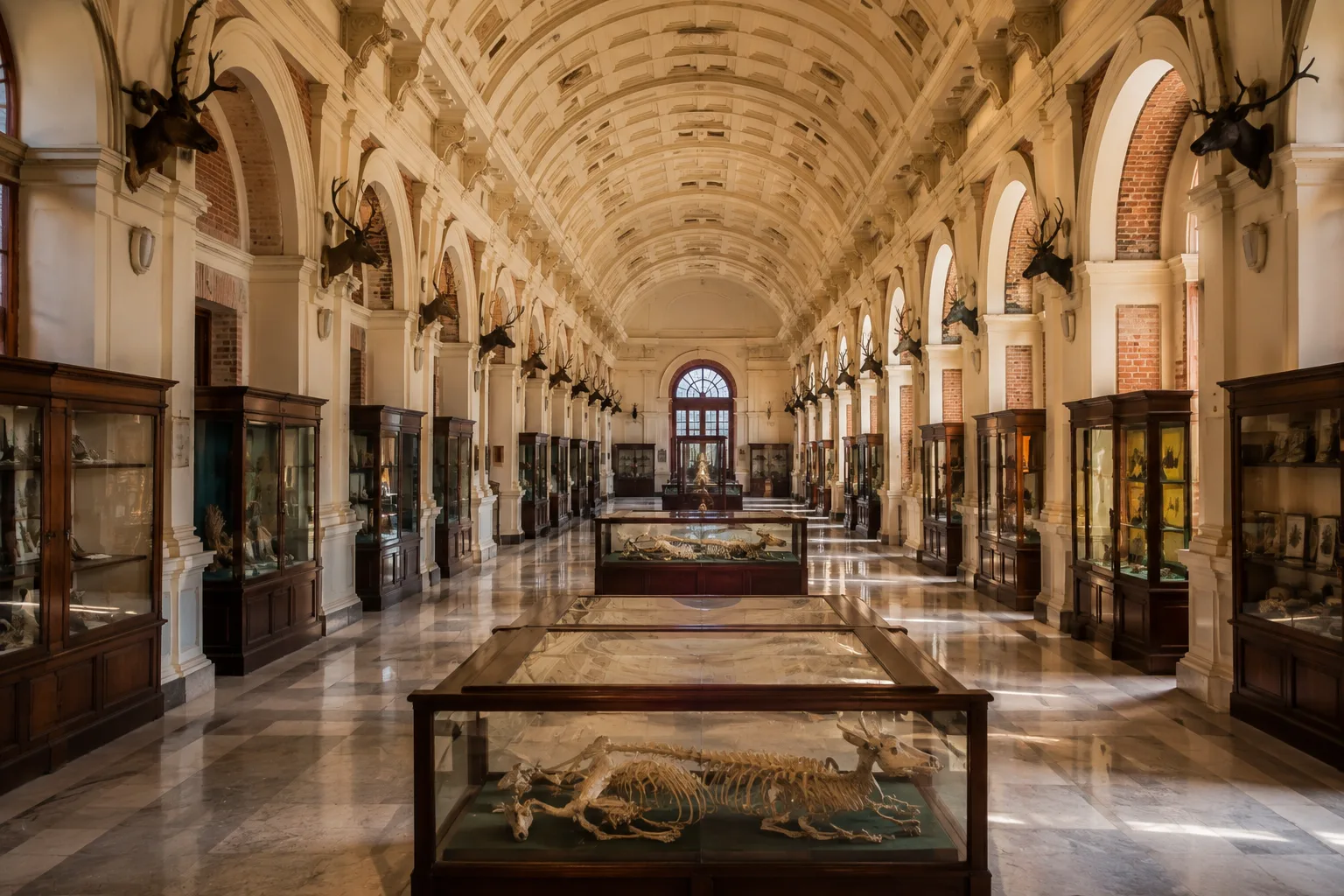
The museums are an important part of the visitor experience. They bring together specimens, models, photographs, wood samples, insects, plant diseases, and other material related to forestry.
One of the most interesting is the forest research institute museum collection, where different aspects of forest science are presented in a way that visitors can understand without needing a technical background.
The Timber Museum, for example, displays 126 commercially important wood species. Visitors can see the natural appearance of different woods, photographs of the trees, distribution maps, microscopic wood structures, and models related to timber seasoning and engineering. One of its notable displays is a cross-section of a 704-year-old deodar tree.
The Pathology Museum focuses on tree diseases and timber decay. It has around 900 exhibits covering diseases affecting roots, stems, foliage, and timber.
The Entomology Museum is another interesting stop, especially for children and anyone interested in insects. It includes displays of butterflies, beetles, bees, wasps, bugs, dragonflies, termites, forest pests, and other insect groups. There is also an interactive section for children.
These museums make the visit more than just an architecture tour.
Botanical collections and green spaces
The campus also has important botanical resources.
The official Forest Botany Division describes the Arboretum as an area of about 30 hectares containing hundreds of plant species. It includes trees, shrubs, climbers, bamboo, and other plant collections.
There is also a Bambusetum with collections of bamboo species used for research and educational purposes.
For visitors, these green areas add another side to the experience. You can spend time around the architecture and museums and still enjoy the natural surroundings.
That balance between buildings and greenery is one of the strongest reasons the campus stands out among Dehradun tourist attractions.
Best Photography Spots
If you enjoy photography, FRI is one of those places where you can easily spend more time than expected.
The architecture gives you strong symmetrical compositions, while the large lawns and trees provide plenty of natural backgrounds.
You do not need professional equipment. Even a phone camera can capture good photographs here if you pay attention to light and composition.
The central front lawn
The large lawn in front of the main building is the obvious place to start.
Stand at a little distance and use the entire building in the frame. A straight-on photograph works well because the building itself has strong symmetry.
Early morning and late afternoon can give softer light and reduce harsh shadows.
Architectural details
Do not only photograph the complete building.
Look for smaller details such as:
- Columns and arches
- Large windows
- Doorways
- Decorative sections
- Long corridors
- Symmetrical walls
- Repeated architectural patterns
These smaller photographs can make your photo collection more interesting.
Green pathways
The trees and open spaces around the campus offer a completely different look.
Try photographing a pathway with trees on both sides or use the greenery as a natural frame around the building.
If you are visiting during a season when the campus is particularly green, take some wider landscape shots as well.
Main building and Himalayan backdrop
On a clear day, the wider setting can add another layer to your photographs.
The official institute describes the Outer Himalayas as forming the backdrop to the campus.
If visibility is good, try including the surrounding landscape rather than cropping tightly around the building.
Photography tip
Avoid rushing through the campus just to get the famous front-facing photograph.
Walk around, look at the architecture from different angles, and take a few minutes to notice the trees and open spaces.
That usually produces a much more varied collection of photographs.
Visitor Information
Before visiting, it is worth checking the latest information because the institute has changed its visitor arrangements and entry charges during 2026.
The official FRI website currently shows a circular regarding the opening of the premises and museums with revised entry fee rates from 25 May 2026.
Current information reported following that official revision lists the following tourist charges:
| Visitor / Service | Current reported charge |
| Indian tourist campus entry | ₹100 |
| Foreign tourist campus entry | ₹1,000 |
| Indian adult museum ticket | ₹150 |
| Foreign adult museum ticket | ₹1,500 |
| School student / child museum ticket | ₹30 |
| College student museum ticket | ₹50 |
These rates are based on the 2026 revised fee information reported after the institute’s May 25 reopening. Since visitor charges can change, it is still best to confirm the latest notice before travelling.
Timings
The official FRI website currently lists general working hours of 9:00 AM to 5:30 PM, Monday to Friday, but general office hours should not automatically be treated as tourist entry hours.
Visitor access can also change because of holidays, administrative requirements, security arrangements, maintenance, or special events.
The institute’s official circular page shows several visitor-closure notices during 2026, including temporary closures and specific dates when the campus was closed to visitors.
So, before travelling, checking the latest notice on the official FRI website is a smart step.
How much time should you keep?
If you only want to see the architecture and take photographs, around 1–2 hours may be enough.
If you also want to visit the museums and spend time walking around the campus, keep around 2–3 hours.
Students, families, photographers, and people interested in forestry may want to spend even longer.
How to reach FRI
The institute is located in the New Forest area of Dehradun and is accessible by road.
You can reach it by:
- Private car
- Taxi
- Auto-rickshaw
- Local transport
If you are coming from Dehradun Railway Station or the main city area, allow some extra time for traffic rather than planning the journey down to the exact minute.
For a first-time visitor, using a taxi or cab can be the simplest option, especially if you are travelling with family.
What should you carry?
You do not need much for a normal visit.
Carry drinking water, your phone or camera, comfortable footwear, and some cash as a backup.
If photography is your main reason for visiting, make sure your phone or camera has enough storage and battery.
Most importantly, remember that this is still a functioning research institution, not only a tourist attraction. Follow visitor instructions and stay within areas open to the public.
Nearby Places to Explore
One advantage of visiting FRI is that you can easily combine it with other attractions in your Dehradun itinerary.
Instead of spending the whole day at one location, you can plan two or three stops depending on your interests.
Robber’s Cave
Robber’s Cave, also known as Gucchupani, is one of the most popular natural attractions in Dehradun.
It is known for its rocky cave formation and stream flowing through the natural passage.
The experience is completely different from FRI. If FRI gives you architecture, history, and museums, Robber’s Cave gives you water, rocks, and a more adventurous outdoor experience.
Tapkeshwar Mahadev Temple
Tapkeshwar Mahadev Temple is another well-known attraction in Dehradun.
The temple is located inside a natural cave and is associated with Lord Shiva. Water naturally drips onto the Shivling inside the cave, which is one of the distinctive features of the temple.
It can be a good addition to your itinerary if you want to combine sightseeing with a spiritual stop.
Malsi Deer Park
Malsi Deer Park, located towards the foothills of Mussoorie, is another option for families and nature lovers.
The area provides a more relaxed outdoor experience and can work well if you are travelling with children.
Dehradun city attractions
You can also keep some time for exploring the city itself.
Depending on your interests, you can add places such as the Clock Tower area, local markets, temples, cafes, or other heritage and cultural spots.
If you are creating a list of places to visit in Dehradun, FRI can easily be included because it offers something different from the city’s natural attractions.
A simple one-day plan
If you want to cover several places without rushing, you could plan your day like this:
Morning: FRI campus and museums
Afternoon: Lunch and a short break
Later afternoon: Robber’s Cave
Evening: Explore a local cafe or market
The exact order can be changed depending on opening hours, traffic, weather, and how much time you want to spend at each place.
The main idea is to leave some breathing room in your itinerary.
Conclusion
The Forest Research Institute Dehradun is more than just an iconic building for photographs. Its long history, impressive architecture, museums, botanical collections, and peaceful green campus make it one of the most interesting places to include in a Dehradun itinerary. Whether you enjoy history, architecture, nature, or photography, there is something different to experience here.
If you are planning a complete Dehradun trip, you can easily combine FRI with other nearby attractions and leave some time for exploring the city’s local culture and shopping. For those looking for traditional, festive, or wedding outfits during their stay, Kashmiri Sons is another local name worth exploring. The brand has been serving customers since 1975 and offers everything from traditional clothing to modern fusion wear, including wedding collections for both men and women.
So, instead of treating FRI as just a quick photo stop, take some time to explore the campus, visit the museums, and appreciate the history behind this remarkable landmark. It can easily become one of the more memorable stops on your Dehradun trip.
People Also Ask – Forest Research Institute Dehradun
What is Forest Research Institute Dehradun famous for?
Forest Research Institute Dehradun is famous for its historic Greco-Roman architecture, forestry research, museums, and beautiful campus. It is one of Dehradun’s most recognised landmarks.
How can I get admission to Forest Research Institute Dehradun?
You can join Forest Research Institute through its various academic programmes in forestry and related fields. Admission requirements and entrance procedures vary by course.
What is the entry fee for Forest Research Institute Dehradun?
The Forest Research Institute Dehradun campus has a nominal entry fee for visitors. The fee may vary depending on the visitor category and museum access.
Is Forest Research Institute Dehradun open for visitors?
Yes, Forest Research Institute Dehradun is open to visitors during designated visiting hours. Visitors can explore the campus and its museums while following the institute’s entry guidelines.
Frequently Asked Questions About Forest Research Institute Dehradun
Where is Forest Research Institute Dehradun located?
Forest Research Institute is located on Chakrata Road in Dehradun, Uttarakhand. Its expansive campus is one of the city’s most popular attractions.
What is Forest Research Institute Dehradun famous for?
It is best known for forestry research, its iconic colonial-era architecture, museums, and lush green campus.
Can tourists visit Forest Research Institute Dehradun?
Yes, tourists can visit the FRI campus during permitted visiting hours. The institute is a popular sightseeing spot in Dehradun.
What can I see inside Forest Research Institute?
Visitors can explore the historic main building, landscaped campus, and several museums showcasing forestry, wildlife, insects, and other natural-history collections.
What is the Forest Research Institute Dehradun entry fee?
FRI generally charges a nominal entry fee for visitors. The applicable fee can vary, so checking the latest visitor information before your visit is recommended.